
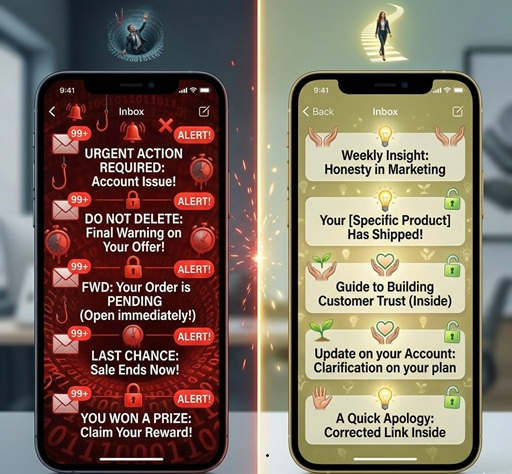
Beyond the Click, The Ethics of Truthful Subject Lines in Email Marketing
By Cap Puckhaber, MarketingSpiritual.com, Reno, Nevada
stood in my office in Reno last week looking at a subject line that made my skin crawl. The text claimed I had an urgent account issue with a software company I trust. My heart skipped a beat because I value my digital security above all else. I clicked the email only to find a generic sales pitch for a new feature. This moment reminded me why Black Diamond Marketing stands for something different. Cap Puckhaber believes that your subject line is the first promise you make to a customer. If you break that promise before the email even opens, you have already lost the relationship.
The Micro Betrayal of the Inbox
Every morning we wake up to a digital flood of noise and false promises. You likely see dozens of emails claiming you won’t believe what happens next. These small lies create a cumulative effect of distrust in the human mind. Because consumers are smarter than ever, they can spot a fake hook from a mile away. I have seen brilliant brands destroy their reputation by chasing a single click. Since trust is the only currency that matters, we must treat the inbox as a sacred space. But many marketers still treat it like a battlefield where the loudest person wins.
Why the Open Rate is a Vanity Metric
Many consultants will tell you that the open rate is the most important number. They suggest using any tactic necessary to get that initial click. But an open followed by immediate resentment is actually a failure. If your reader feels tricked, they will never buy your product. So, you must focus on the quality of the interaction rather than just the quantity. Cap Puckhaber prefers a smaller list of loyal advocates over a massive list of angry subscribers. High open rates mean nothing if your unsubscribe rate climbs right along with them.
The Anatomy of a Deceptive Subject Line
Deception often starts with a sense of manufactured urgency that feels heavy. You might see subject lines that say your order is pending when you haven’t bought anything. This tactic aims to trigger a survival response in the brain. Because this creates a negative emotional anchor, the reader associates your brand with stress. I once worked with a client who insisted on using these high-pressure tactics. Their sales plummeted because people eventually stopped opening their messages entirely. Despite their initial protests, they learned that honesty is actually more profitable.
The Problem with Fake Replies
One of the worst offenders is the use of the RE prefix in a marketing blast. This trick makes the recipient think they are continuing an existing conversation. Since the reader soon realizes it is an automated ad, they feel a sharp sense of betrayal. This specific tactic triggers what psychologists call reactance bias. When a person feels manipulated, they naturally want to rebel against the source. Cap Puckhaber suggests avoiding any prefix that implies a relationship that does not exist. You should start every conversation on a foundation of absolute clarity.
What You Can and Can’t Do Under the Law
The legal landscape of email marketing is more than just a set of boring rules. You should look at the CAN-SPAM Act as a baseline for human decency. This law explicitly forbids the use of misleading header information or deceptive subject lines. Because your business depends on your ability to reach the inbox, you must follow these guidelines. I have watched many entrepreneurs get flagged by major providers for being too aggressive. Since the algorithms are getting better at spotting fraud, you cannot hide behind clever wordplay. You must be literal and honest in every single broadcast.
Understanding Material Misrepresentation
A subject line becomes illegal when it contains a material misrepresentation of the content. This means you cannot promise a gift and then deliver a sales pitch instead. If you tell someone they won)t be charged, you better mean it. But some marketers try to find loopholes in the wording to skirt the law. They think they are being smart by using vague language to hide their intent. Cap Puckhaber knows that the spirit of the law is just as important as the letter. If your intent is to confuse, you are already heading toward a legal disaster.
Why Deceptive Marketing Patterns Fail Today
The modern consumer has developed a biological filter for digital noise and clutter. People can sense the energy behind a subject line before they read the full sentence. If you use a dark pattern, you are essentially stealing time from your audience. Because time is the most limited resource we have, this is a form of theft. I often tell my clients in Reno that they are competing for attention with family and friends. Since your email sits next to a message from their mother, you must be respectful. You won’t win a place in their heart by being a digital pickpocket.
The Rise of Algorithmic Accountability
Search engines and email providers are now acting as the gatekeepers of truth. They use complex models to track how people interact with your specific domain. If thousands of people delete your email without reading it, your reputation drops. This technical penalty makes it harder for your future messages to reach the primary tab. So, being deceptive is actually a bad technical strategy for your business. Cap Puckhaber views deliverability as a reflection of your brand’s overall integrity. Because the machine learns from human behavior, you cannot trick the system for long.
Ethical Copywriting Tips for High Open Rates
Writing an honest subject line does not mean you have to be boring. You can still use curiosity and benefit-driven language to capture interest. The key is to ensure the body of the email fulfills the promise of the header. Because alignment creates a sense of relief, your readers will look forward to your notes. I suggest lead with the most valuable piece of information you have to share. Since your audience is busy, they appreciate a direct and helpful approach. But you must be careful not to overpromise on the results.
The Power of the Literal Truth
I once sent an email with the subject line I made a mistake. It was the truth because a link in my previous message was broken. The open rate was the highest I had seen in over three months. People didn’t click because I used a trick or a flashy font. They clicked because they saw a human being taking responsibility for an error. This level of transparency is rare in a world of polished corporate speak. Cap Puckhaber encourages you to share the messy parts of your business journey. Because perfection is a lie, people find honesty to be incredibly refreshing.
Using Email Marketing Transparency as a Filter
Transparency acts as a powerful magnet for the right kind of customers. When you are honest about your offers, you attract people who value integrity. These individuals are more likely to become long-term partners for your brand. Since they aren’t being hunted, they feel safe to explore what you have to offer. I have seen this approach lead to much higher customer lifetime values. Because the initial interaction was clean, the rest of the relationship remains stable. You don’t need to shout when you are telling the truth.
How to Build a Resource for Your Audience
Your emails should serve as a library of wisdom for your specific niche. Every message you send should add a brick to the wall of your authority. If you provide consistent value, people will search for your name in their inbox. This is the goal of a sustainable relationship marketing strategy. You want to be the person they turn to when they have a problem. Cap Puckhaber spends hours ensuring that every piece of content solves a real issue. Since you are a guide, your directions must be accurate and easy to follow.
Comparing Deceptive and Ethical Subject Lines
We should look at some specific examples to understand the difference in tone. A deceptive line might say you have a private message waiting for you. This implies a personal connection that is likely not present in a mass email. An ethical version would say here is the guide you requested last week. Because the second option is specific, it respects the memory of the reader. I find that being specific is the easiest way to remain completely honest. Since vagueness is the tool of the scammer, clarity is the tool of the leader.
The Danger of False Urgency in Marketing
Manufactured deadlines are a plague on the digital marketing industry today. You see countdown timers that reset every time you refresh the browser page. This practice tells your customer that your word means absolutely nothing. Because they know the sale won’t actually end, they lose respect for your brand. I suggest only using urgency when there is a physical or logistical limit. If you have ten seats in a room, say there are ten seats. Cap Puckhaber believes that real limits create a healthy sense of boundaries for everyone.
The Role of Deliverability Best Practices
Maintaining a clean sender reputation requires more than just avoiding spam words. You must also ensure that your content is helpful to the person receiving it. If your subject lines lead to high complaint rates, you will be blocked. This is why following subject line best practices is vital for your growth. Because you want to stay in the good graces of the major providers, you must be careful. I recommend auditing your subject lines every quarter to see what works. Since patterns change, you must stay aware of how people are reacting.
Managing Your CRM with Integrity
A good customer relationship management system helps you stay honest at scale. You can use data to ensure you only send relevant offers to specific people. If someone just bought your course, don’t send them a subject line saying they missed out. This lack of coordination makes you look like an unorganized robot. Because people want to feel seen, you should use your tools to personalize the truth. Cap Puckhaber uses these systems to honor the individual path of every single subscriber. Since every person is different, your communication should reflect their unique needs.
Practicing Radical Honesty in Every Broadcast
I recently had a conversation with a business owner who was afraid to be too honest. They thought they would lose sales if they didn’t use flashy hooks. I challenged them to try a week of radical transparency in their emails. They shared their actual inventory numbers and their real struggles with shipping. The response from their community was overwhelming and led to record profits. Because people were tired of the hype, they jumped at the chance to support a real person. Cap Puckhaber has seen this happen across dozens of different industries and niches.
Avoiding the Bait and Switch Tactic
The bait and switch is a classic trick that involves promising one thing to get an open. Once the user is inside, the topic shifts entirely to a different product. This is a clear violation of the ethical copywriting tips I share with my students. Because it leaves the reader feeling used, it kills any chance of a future sale. You should always ensure the first sentence of your email relates to the subject line. Since this creates a smooth transition, the reader feels a sense of continuity. But many people forget this because they are too focused on the click.
Defining the Value of a Trustworthy Brand
A brand is essentially the sum of all the promises you have kept over time. If you keep your promises in the inbox, you build a fortress of trust. This fortress protects you during slow seasons or when the market fluctuates. Because your audience trusts your word, they will follow you into new ventures. I have built Black Diamond Marketing on this exact principle of long-term thinking. Since it takes years to build a reputation, you should not risk it for a trick. Cap Puckhaber knows that the truth is the most powerful marketing tool in existence.
The Psychological Impact of Truthful Marketing
Honesty creates a sense of calm in a world that is constantly screaming for attention. When a customer knows you won’t lie to them, their guard drops naturally. This allows them to listen to your message with an open and clear mind. Because they aren’t looking for the catch, they can focus on the value. I believe that this is the highest form of service you can provide. Since you are helping them make an informed choice, you are empowering them. But you can only do this if you are willing to be vulnerable.
How Ethical Brands Avoid Deceptive Marketing Patterns
You can look at successful companies like Dove or Patagonia for inspiration on transparency. They often share their failures and their areas for improvement with the public. This builds a deep emotional connection that survives through various market cycles. You can read more about these strategies on Forbes. Their success proves that you don’t need to use gimmicks to be profitable. Because they lead with their values, their marketing feels like an extension of their mission. Cap Puckhaber encourages you to find your own version of this authentic voice.
Creating a Brand Strategy Framework for Truth
You should write down your ethical boundaries before you start your next campaign. Decide exactly what words you will never use to describe your products. This clarity prevents you from making desperate choices when sales are a bit slow. Because you have a plan, you can stay consistent with your brand voice. I find that having a framework makes the writing process much easier and faster. Since you know what you stand for, the words flow more naturally. You won’t have to second-guess your intent because it is already defined.
The Long Term Rewards of Ethical Copywriting
Choosing the high road in marketing is not always the easiest path to take. You might see others making quick money by using shady tactics and loud subject lines. But those businesses usually disappear as quickly as they arrived on the scene. Because you are building for the future, you can afford to be patient. I have seen ethical brands thrive for decades while their competitors faded away. Since your reputation is your most valuable asset, you must protect it fiercely. Cap Puckhaber is proud to stand with those who choose truth over hype.
Building Community Through Shared Values
Your email list should feel like a community of people who share your outlook. When you are honest, you attract others who also value the same principles. This creates a feedback loop of positive energy and mutual respect for everyone. Because these people feel connected to you, they will help spread your message. I have seen organic word of mouth grow significantly when a brand stays truthful. Since you aren’t trying to hide anything, you have nothing to fear from scrutiny. You can stand tall in the marketplace knowing your hands are clean.
Frequently Asked Questions
What is the best way to write a subject line that is both honest and interesting?
You should focus on the specific benefit or the unique story inside the email. Avoid using vague curiosity gaps that don’t relate to the actual content. Because specificity builds trust, it often leads to higher engagement over time. Cap Puckhaber suggests using a conversational tone that sounds like a friend talking to a friend. Since people crave real connection, they will respond to your authentic voice.
Can I still use urgency in my subject lines if it is true?
Yes, you can absolutely use urgency if there is a real deadline or limit. If your early bird pricing ends on Friday, you should tell your audience that. Because this is a factual statement, it is not a deceptive marketing pattern. The problem only arises when you invent a deadline that does not exist. I recommend being clear about why the limit exists so people understand the context.
How does a deceptive subject line affect my email deliverability?
Deceptive lines often lead to high spam complaint rates and low engagement scores. Email providers like Gmail track how many people delete your messages without opening them. If your reputation drops too low, your emails will start going directly to the spam folder. Because this effectively kills your marketing reach, you must avoid tricks at all costs. Since deliverability is hard to fix once it is broken, you should protect it daily.
What should I do if I accidentally sent a misleading subject line?
The best course of action is to send a follow-up email with an honest apology. Explain what happened and why the previous subject line was not accurate. Because people appreciate humility, they will likely forgive the mistake and trust you more. I have seen this happen many times and it usually strengthens the relationship. Cap Puckhaber believes that admitting a fault is a sign of a strong and healthy brand.
Are there legal consequences for using misleading subject lines in the US?
The CAN-SPAM Act allows for significant fines for every single deceptive email sent. While the government usually targets large-scale scammers, small businesses are not exempt. Beyond the legal risk, the damage to your brand reputation can be permanent and costly. Because a single lawsuit can destroy a small company, you must stay compliant. I suggest reading the full guidelines on the official FTC website.
Final Thoughts on Email Marketing Transparency
I hope this guide has helped you see the value of truth in your marketing. We have explored why deceptive subject lines are a losing strategy for your brand. Because your audience deserves respect, you should always lead with honesty and clarity. Since you are building a legacy, every word you write matters for your future. I am excited to see more entrepreneurs in Reno and beyond embracing these ethical practices. Cap Puckhaber will continue to advocate for a world where marketing feels like a true invitation. May your inbox always be a place of integrity and genuine connection.
Read more on Why Honesty and Transparency in Marketing Are Non-Negotiable
Check out How to Build and Earn Customer Trust with Data-Driven Insights
Check out 5 Simple Steps to More Transparent Marketing by Cap Puckhaber
More Blogs from Cap Puckhaber

Follow Cap Puckhaber on Social Media
- Connect with Cap Puckhaber on Facebook
- See Cap Puckhaber’s latest adventures on Instagram
- Read Cap Puckhaber’s thoughts on X
- Join the conversation on Threads
- Follow Cap Puckhaber on Mastodon
- Browse my Pins on Pinterest
- See my Marketing Articles on Medium
- Follow Cap Puckhaber’s Company Page on LinkedIn
- Check out Cap Puckhaber on BlueSky
- Follow Cap Puckhaber on Substack


Cap Puckhaber
Backpacker, Marketer, Investor, Blogger, Husband, Dog-Dad, Golfer, Snowboarder
Cap Puckhaber is a marketing strategist, finance writer, and outdoor enthusiast from Reno, Nevada.
He writes across CapPuckhaber.com, TheHikingAdventures.com, SimpleFinanceBlog.com, and BlackDiamondMarketingSolutions.com.
Follow him for honest, real-world advice backed by 20+ years of experience.